• Goldhub
  • Research
  • Central Banks

  • Latest issue

    Central Banks


    Central bank demand steady but concentrated in May

    Krishan Gopaul

    Senior Analyst, EMEA World Gold Council


    Today we have published the latest update to our central bank gold reserves dataset, which includes data reported by the IMF for May 2020. We encourage you to download it here but we have highlighted some of the key data points below.

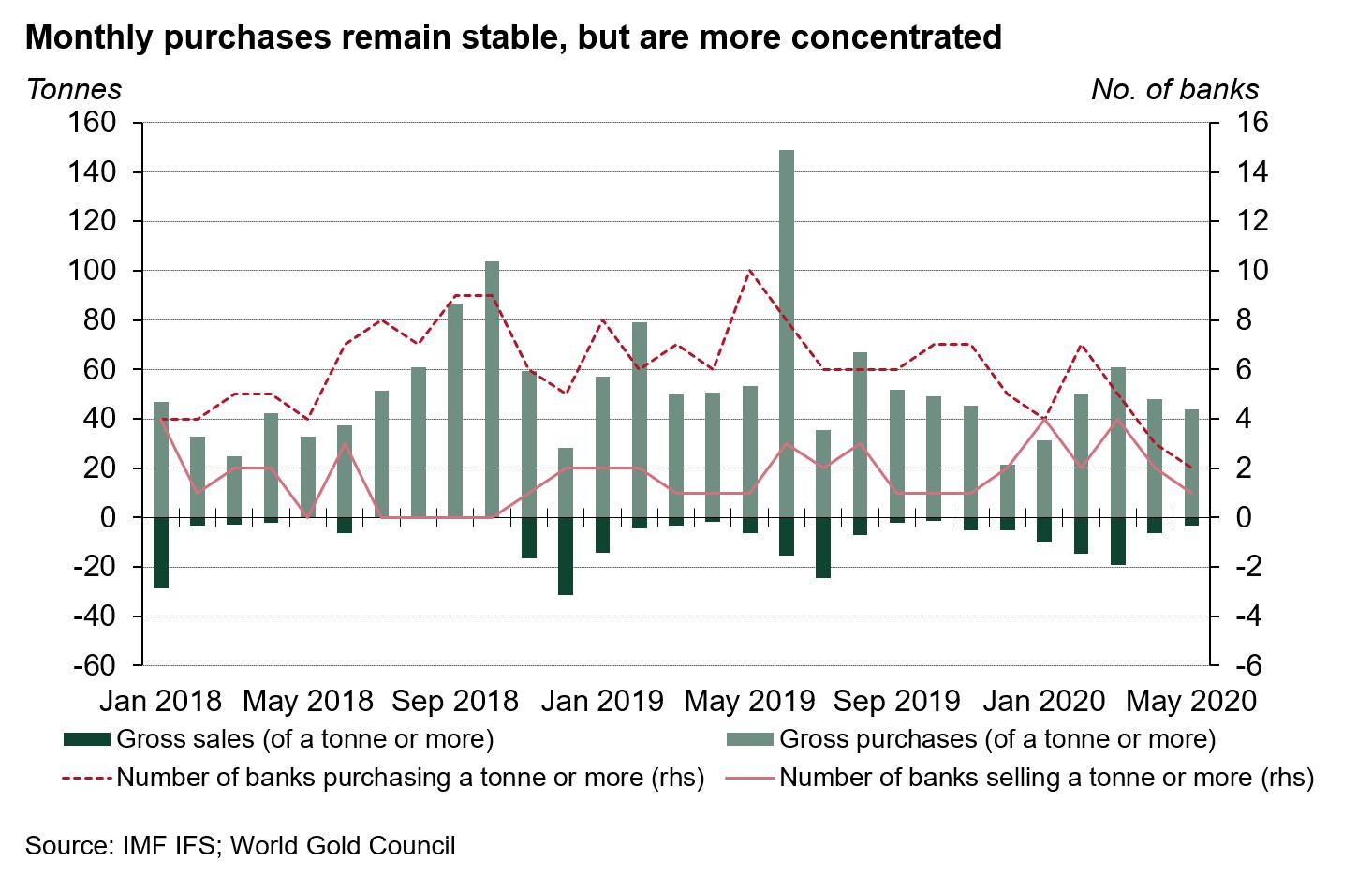
    Central bank net purchases totalled 39.8t in May, in line with net purchases in March and April, and above the monthly average of 35t over the first four months of this year. On a y-t-d basis, IMF data shows that net purchases are now 181t, 31% lower than the same period in 2019.

    As we have previously mentioned, we expect central banks to remain net buyers this year, but their level of purchasing will be lower than the multi-decade record levels in 2018 and 2019.1 So far, net purchases have been indeed lower, but we have seen several central banks in 2020 allocating more to gold. Y-t-d, five central banks have increased their gold reserves by a tonne or more.


    Yet, the initial data for May shows that, like April, buyers were few and far between. In fact, only two banks increased their gold reserves significantly (of a tonne or more) during the month. Turkey was once again the largest purchaser, increasing reserves (ex ROM) by 36.8t.2 This takes their total gold reserves to 560.8t, 36.4% of total reserves. Uzbekistan’s gold reserves also grew during the month, rising by 6.8t to 342.8t (59.5% of total reserves).

    It’s also worth paying some attention to the sales activity. In May, only Mongolia saw their gold reserves decline significantly (again, of a tonne or more), by 3.3t, and on a y-t-d basis, six central banks have now decreased their gold reserves, totalling 31.8t. The number of sellers is slightly higher than the total of five banks in 2018 and four in 2019 who reduced their gold reserves. While purchases continue to dwarf sales, we will continue to monitor developments in sales.

    Look out for our summary of central bank demand during H1 in our Q2 Gold Demand Trends report which will be published at the end of July.3


    Footnotes

    1 https://www.gold.org/goldhub/gold-focus/2020/06/central-banks-remain-positive-towards-gold-despite-lower-buying-april

    2 The Reserve Option Mechanism (ROM) – introduced in 2011 – allows commercial banks to use gold as part of the required reserves that they deposit with the Central Bank of the Republic of Turkey (CBRT).

    3 https://www.gold.org/goldhub/research/gold-demand-trends

    Podcast: Central bank gold reserves before and after the Covid-19 shock

    World Gold Council

    The experts on gold


    Our Director of Central Banks and Public Policy, Kurtulus Taskale Diamondopoulos, joins Pierre Ortlieb, economist at OMFIF, to discuss central bank gold reserves management amid the coronavirus pandemic.

    Listen below as they speak about our Central Bank Gold Reserves Survey, the state of play in global central bank gold holdings, the World Gold Council's Gold Valuation Framework, the mechanics of gold swaps and deposits, and the outlook for gold.

    Capital preservation in a post-COVID world

    Jennifer Johnson-Calari

    JJC Advisory


    • Central bank investment objectives rank capital preservation as primary importance;
    • Looking back to 1973, gold has preserved its value in real terms both over the entire period and, importantly over different phases of the business cycle--both expansionary and contractionary;
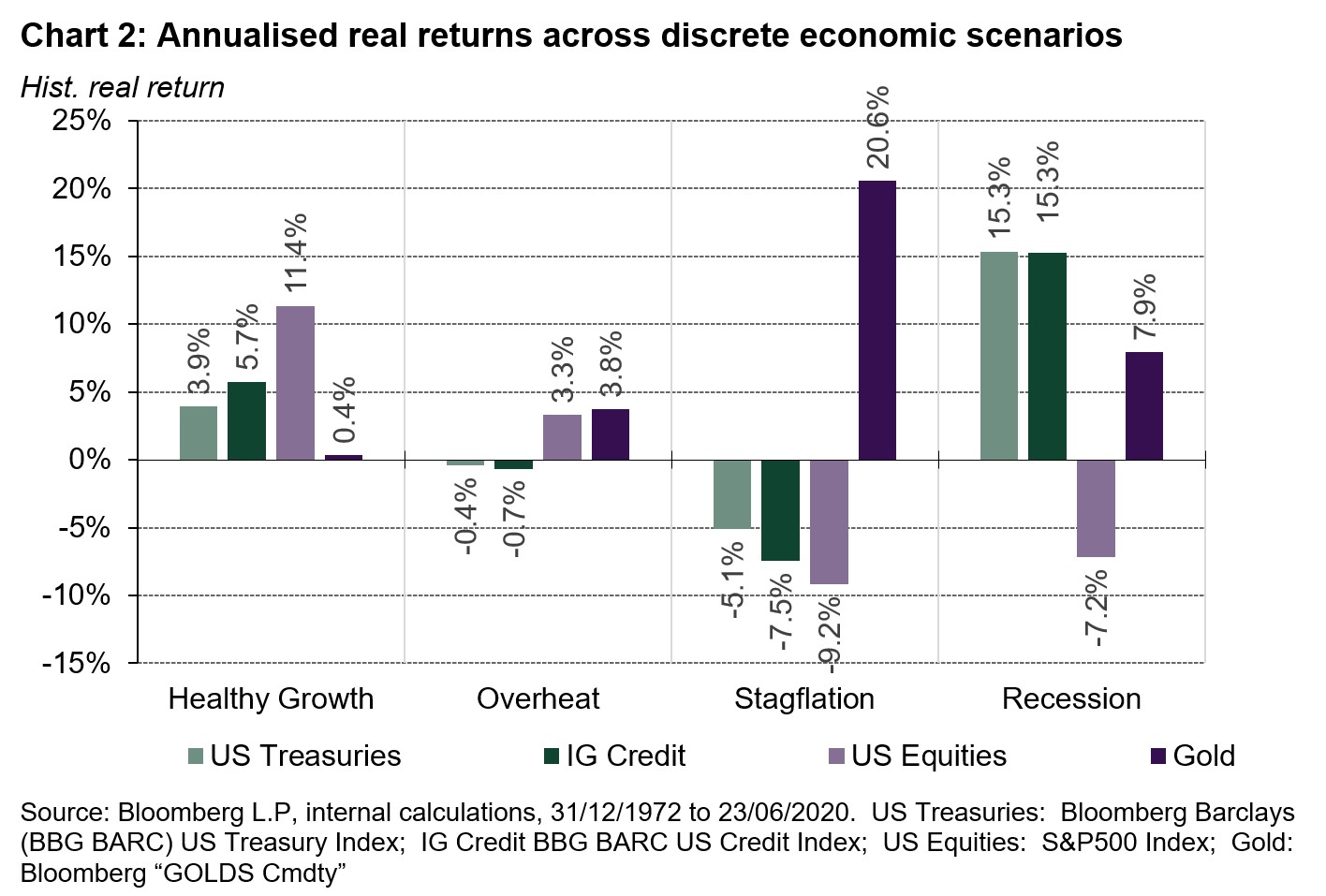
    • In comparing the performance of gold relative to other reserve assets, it was the only major asset class to preserve its value in real terms during periods of stagflation;
    • Looking ahead to the impact of COVID-19 over the medium term, the possibility of an economy characterised by low levels of growth and upward price pressures has increased because of both the negative impact on demand and investment as well as the higher cost of doing business and supply side disruptions;
    • Thus, for those investors focused on capital preservation, gold may be safer by this metric than traditional reserve assets such as government bonds over a medium term horizon.

    Central bank investment objectives typically rank capital preservation as a top priority. And, the best measure of capital preservation would be the real investment return, or the total return adjusted for price inflation. This gives an indicator of the preservation of purchasing power, which is central banks’ underlying goal in the investment of its foreign currency assets.

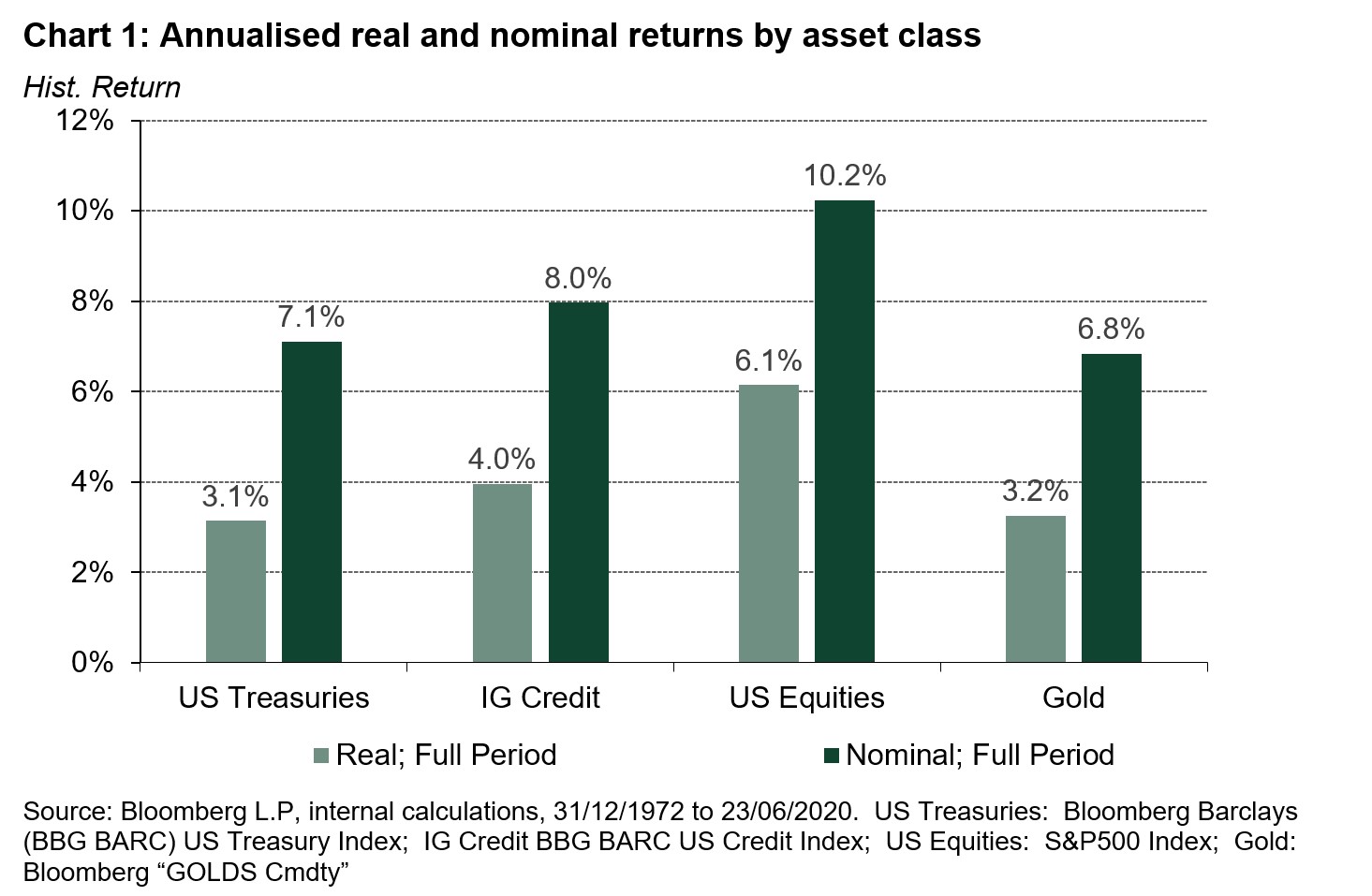
    When viewed over long periods, gold’s performance with respect to capital preservation is quite similar to governments. As illustrated in Chart 1, both gold and US Treasuries achieved positive real returns of around three percent on an annualised basis over the last half century.  


    The story is quite different, however, when assessing capital preservation and returns over discrete economic scenarios over the multiple business cycles over the last half century. In comparing gold with traditional reserve assets—mainly US Treasuries—gold performed better in meeting capital preservation objectives during periods of stagflation. During such periods, fixed income returns were eroded by inflation, and equity returns by low economic growth.


    The global economy is emerging from the COVID-19 crisis in fundamentally different shape than in the preceding decades where globalisation and strong supply side factors both kept inflation at bay and helped fuel economic growth. Pressures on global trade already existed with the recent increase in tariffs but global supply chains have been further disrupted by COVID-19 and international trade, which plummeted in the Spring of 2020 and is unlikely to revert to previous trend growth. Not only have international political tensions increased, but COVID-19 revealed the risks around dependencies on long supply lines. At a micro-economic level, businesses are beginning to reopen but with a much higher cost structure because of health, distancing and sanitation requirements. These factors may also weigh on productivity and prices. Finally, economic growth is likely to remain subdued due to employment uncertainties and continued distancing/isolation—whether government imposed or self-restricted.

    These factors increase the possibility of a stagflation scenario—an outcome nearly unthinkable only six months ago. As investment committees consider alternative economic scenarios, the greater possibility of stagflation would warrant increased attention to the performance of gold to meet real capital preservation investment objectives.

    Bringing transparency to sovereign wealth fund gold holdings

    Kurtulus Taskale Diamondopoulos

    Director, Central Banks & Public Policy World Gold Council


    The primary mission of central bank reserve management is to ensure that reserves are adequate and available during times of need. Therefore, safety and liquidity are key investment factors. Sovereign wealth funds (SWFs), on the other hand, focus more on return as their mission is to invest revenues from government surpluses to generate wealth for present and future generations. Therefore, SWFs’ investment guidelines are more flexible, letting them take more risk and invest in a broader range of asset classes to obtain higher returns. Since the Global Financial Crisis, where low and negative interest rates have become the new normal, this flexibility has made SWFs more important for their country’s wealth management.

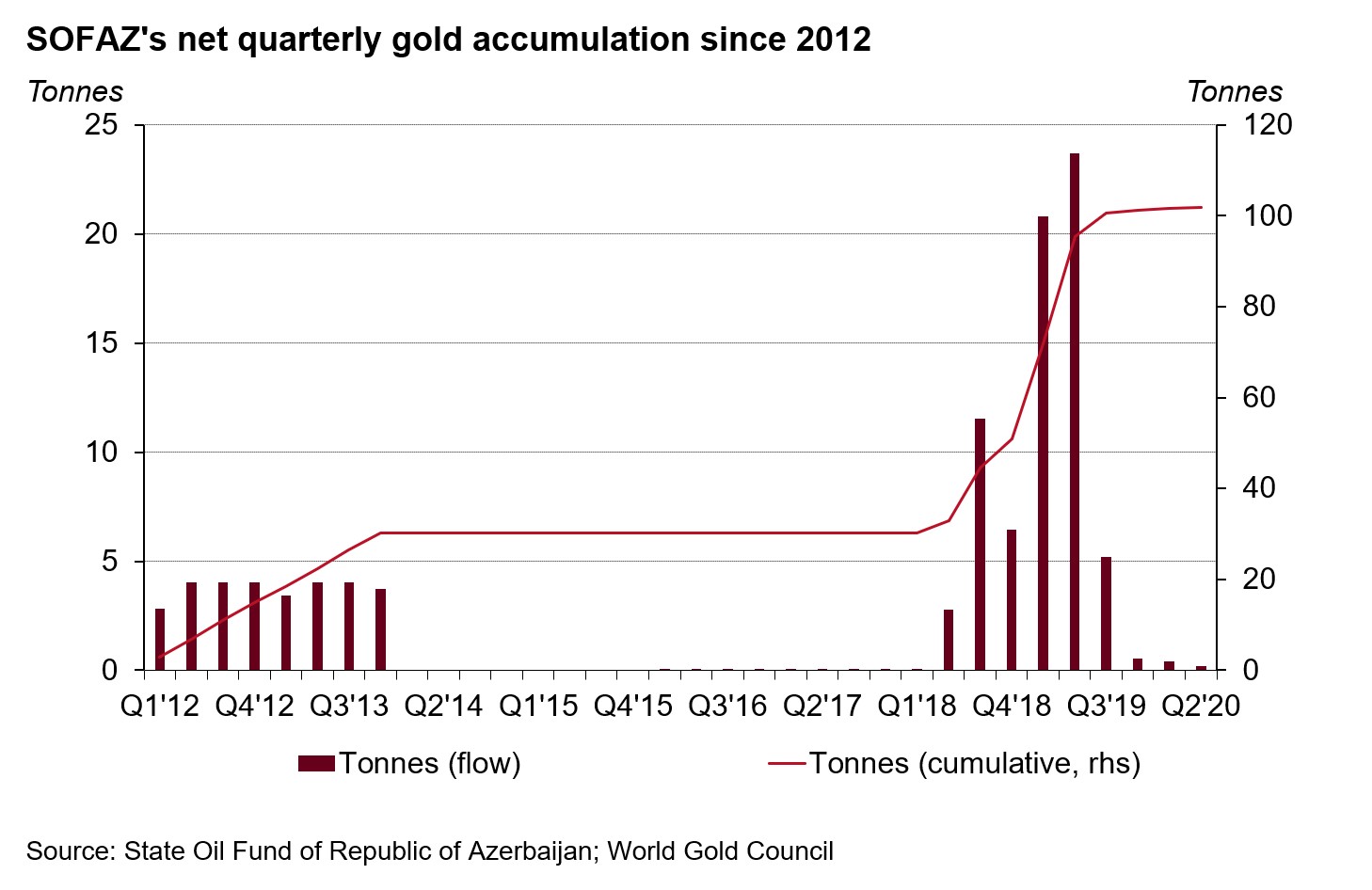
    While central banks voluntarily report their international reserves including gold to the International Monetary Fund each month, SWFs have no global reporting obligations. However, some funds comply with the Santiago Principles, a set of voluntary guidelines that aim to promote transparency.1 As a result, SWFs differ greatly in the disclosure and level of detail of their investment activities. This is true for their gold holdings as well. Unique among SWFs is the State Oil Fund of Republic of Azerbaijan (SOFAZ) because it not only publishes its audited financial statements in its annual report but also reports all other relevant financial information including gold holdings every quarter on its website. SOFAZ also clearly states its policy on gold investments in its website.2

    SOFAZ began buying physical gold – London Good Delivery bars – in 2012, in accordance with the amendments made to the Investment Policy of the Fund for the purposes of diversification. After a four-year hiatus, SOFAZ resumed its gold accumulation in Q2 2018, followed by an amendment to its 2019 investment policy to extend the gold allocation limit from 5% to 10%, along with maximum upper deviation of 3%. As of Q2 2020 the amount of gold included into SOFAZ's investment portfolio has reached 101.8 tons or 13.6 % of total AUM.


    Our central bank statistics capture data directly from the IMF’s International Financial Statistics (IFS) and, when not available, directly from respective central bank websites. There are many nuances to sovereign gold holdings, and in order to provide the most consistent and comparable data we have made it our policy to only report on gold holdings classified as monetary gold held by the central bank.

    But, despite a general belief that SWFs do not invest in gold, our engagement with these institutions in recent years has increasingly shown that many SWFs do incorporate gold in their portfolios for diversification, capital preservation, and other factors.

    Because of this, we have now decided to offer similar reporting facilities to SWFs for their gold holdings if they comply with certain reporting requirements. The most important requirement is the regular availability of public data, released at least every quarter, on their financial statements. Any SWF data that we publish will be included in our existing files.

    This reporting will start with our next data release, when we will add SOFAZ’s gold holdings to the OTHER section of the World Official Gold Holdings report. If more SWFs are willing to disclose their gold holdings, we may consider creating a separate report just for this sector.

    July central bank net purchases lowest since December 2018

    Krishan Gopaul

    Senior Analyst, EMEA World Gold Council


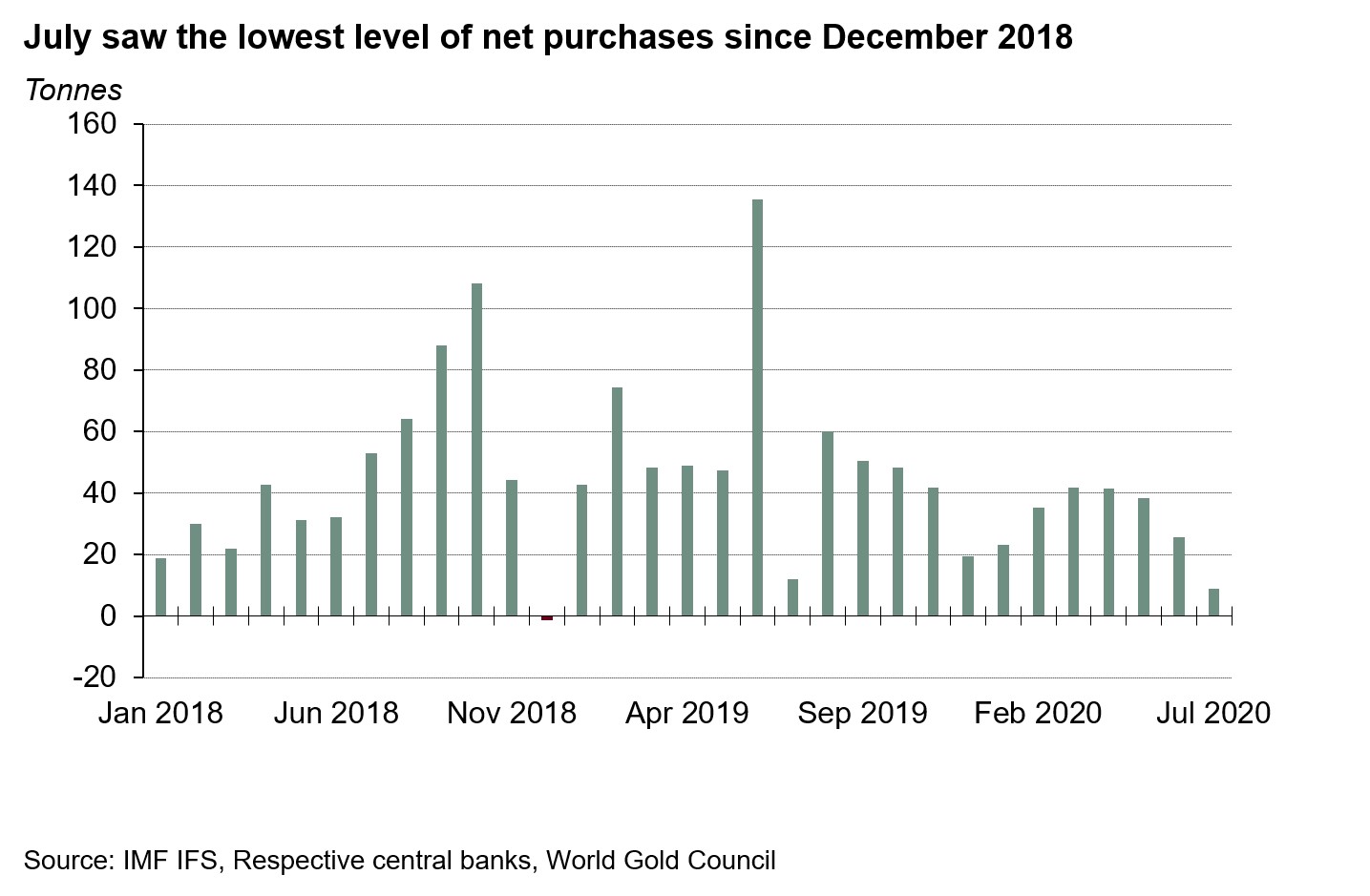
    Our central bank gold statistics were published today, and the latest IMF data makes for a very interesting read. Available data for July highlights central bank net purchases of 8.8t – the lowest level of monthly net purchases since December 2018 (-1.5t).


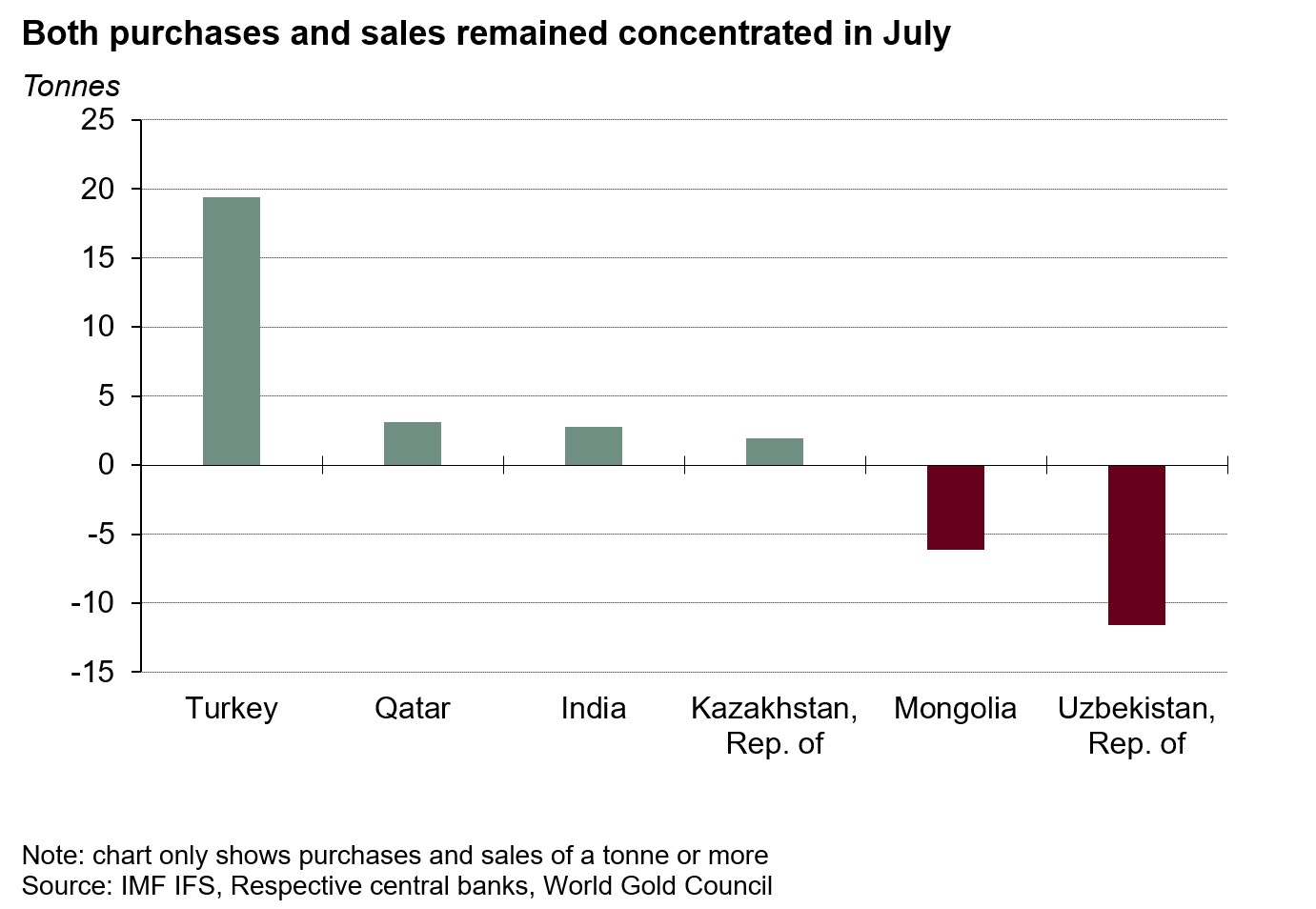
    Gross purchases totalled 27.2t, with buying continuing to be concentrated amongst recent purchasers, a trend we have seen for most of the year. Turkey (19.4t), Qatar (3.1t), India (2.8t), and Kazakhstan (1.9t) all saw gold reserves grow during the month. Gross sales, on the other hand, totalled 17.7t in July, its highest level since July 2019 (24.6t). Uzbekistan (-11.6t) and Mongolia (-6.1t) accounted for 95% of gross sales during the month, with Germany and Russia also seeing marginal declines in gold reserves of around half a tonne.


    Despite the lower level of growth in global official gold reserves in July, year-to-date central banks net purchases remain comfortably above 200t. But the number of sellers is now greater than the number of buyers: 8 central banks have reduced their gold reserves (by a tonne or more) compared to 7 who have increased their gold holdings (by a tonne or more).

    We continue to expect that central banks will remain net purchasers in 2020, extending their annual net buying to eleven consecutive years.

    The full dataset can be downloaded here.

    Understanding the gold lending market

    Isabelle Strauss-Kahn

    Former Lead Financial Officer The World Bank


    I appreciate and welcome the new Guidance Paper on Gold Deposit Rates which has just been released by the World Gold Council. It is a highly interesting, comprehensive, and well documented paper that is an invaluable tool for all central bank reserves managers, an essential read indeed. The release of that Guidance also comes at the right time. Over the last years, we have seen a more and more positive perception of gold as a strategic asset by central banks which have regularly increased their gold holdings. However, central bankers continue asking how to actively manage their gold holdings because the information and understanding of the gold market has been missing. It is true that the gold lending market is an OTC market, and thus, less prone to full transparency, partly due to limitations inherent in price discovery mechanisms. However, gold lending can serve as an important active management tool which can enhance return, of course when market conditions are favourable.

    The Guidance Paper provides all the clues to understanding and grasping the functioning of the market and the different factors which drive the gold lease rates. First, there is a need to properly understand the meaning of different terms used: gold deposit rates, gold lease rates (GLR), Gold Forward Offered rate (GOFO). Second, there is a need to understand the different types of gold trades: straight deposits, forwards, swaps, carry trades. And third, there is a need to understand the behaviour of the different actors in the market: miners/refiners, end-users (jewellers, industries), bullion banks, central banks.


    The Guidance offers a detailed historical analysis of how the different factors driving GLR have been at play. In my view, I would like to focus primarily on two periods: before 1999, when the Central Bank Gold Agreement (CBGA) was signed, and after.

    From the 80s until September 1999, the gold market was bearish. The sales of gold reserves by some central banks as well as the uncertainty about their behaviour going forward were accentuating downward expectations for the gold price. Therefore, the mining producers’ hedging demand increased, sometimes without accurate risk management considerations. To put it simply, miners were increasing selling forward their production and central banks were responding to that increase by lending their gold as GLR were high. However, selling forward implies a spot sale which depresses the spot gold price. I remember well discussions about that kind of “vicious” circle (hedging from producers/central bank lending/declining spot gold price) within the Eurosystem. For some central banks, the lending had no impact on the spot gold price, and, for others, it was contributing to the falling price. The CBGA was signed to stabilise the market and provide greater transparency in central banks’ behaviour as far as their selling and lending activity was concerned. It put a halt to that vicious circle.

    In the years following 1999, gold market has profoundly changed, and became a mature market. Behaviours have changed, miners have closed their hedging books, central banks became buyers more than sellers. They are lending less and less given the low levels of GLR.


    Looking ahead, I think that, unfortunately, GLR may remain low and even negative for the following two main reasons. The first is that real interest rates are extremely low and even negative in the current environment, and they will remain low. Traditional factors explaining the current low real interest rates continue to apply: low potential growth prospects, demographics, and portfolio shift towards safe assets. Furthermore, central banks’ monetary policy will remain extremely accommodative. As is very well explained in the Guidance, when real interest rates are low and decrease, gold price expectations retain a bullish trend which, in turn, will translate into low GLR.

    The second reason is that producers’ hedging demand will remain low (especially if gold price keeps on increasing) while at the same time central banks’ lending supply will remain subdued. This does not mean that GLR spikes may not happen, but I see them as short-lived.

    This also does not mean that central banks should not consider lending if they want to enhance the return on their gold reserves when conditions are favourable. However central banks should be operationally ready to do so when opportunities arise, meaning that they should have:

    1. an understanding of what allocated and unallocated risks are
    2. a strong legal contract with their custodians
    3. an assurance that their gold to be lent is Good Delivery loco London market (the reference)
    4. strong back-office and accounting infrastructure to cope with the gold lending trades.

    Tracking and tracing central bank demand in August

    Krishan Gopaul

    Senior Analyst, EMEA World Gold Council


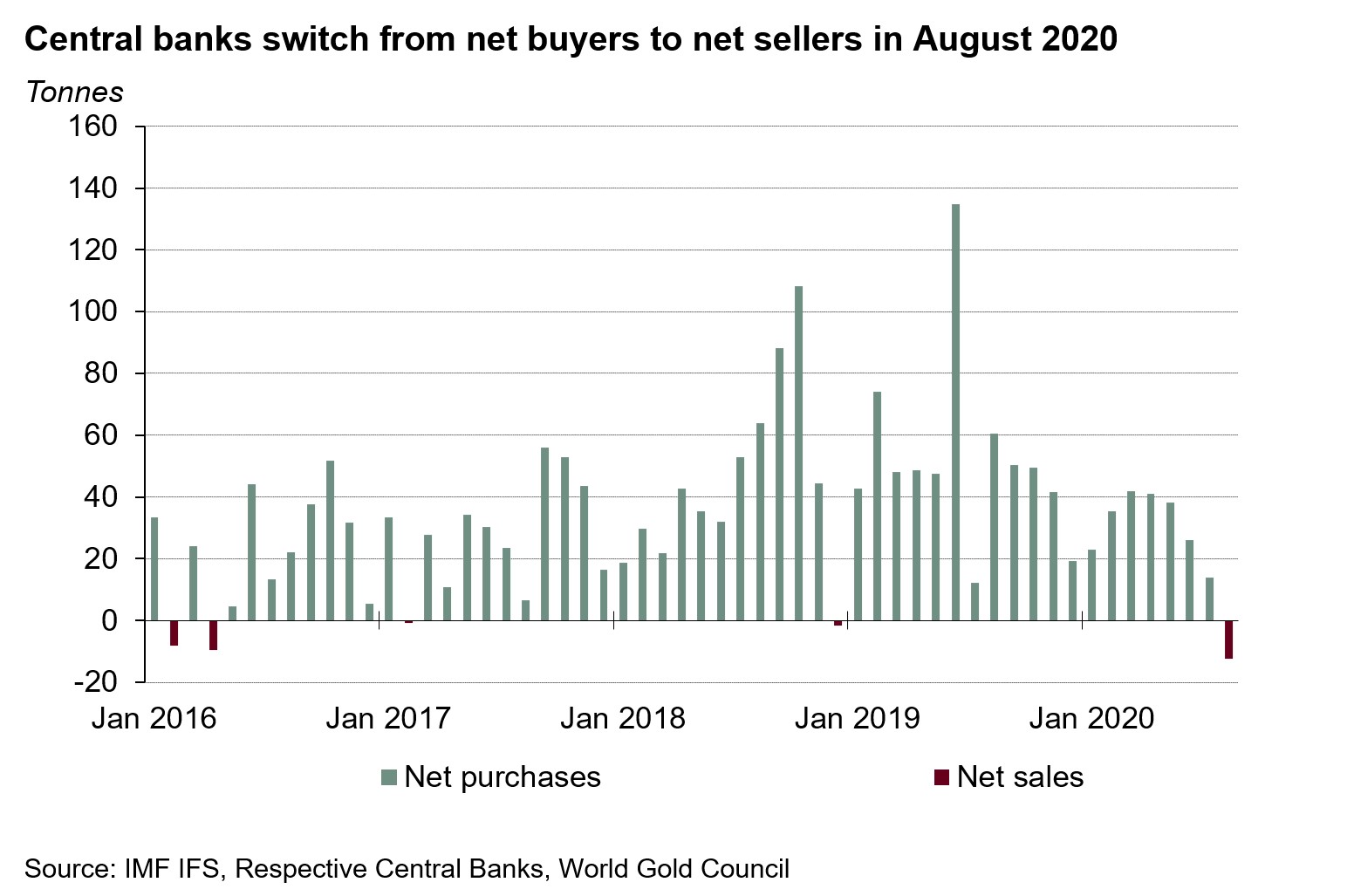
    In August, central banks switched from net buyers to net sellers for the first time in around a year and a half. Global central banks sold a net 12.3 tonnes (t) during the month, continuing this year’s trend of a slower pace of accumulation compared to recent years. Monthly net sales are not unheard of – we have seen it on five separate occasions since the start of 2016, although the decline in August 2020 is the largest drop over this period.


    Despite the most recent data, we remain firm in our expectation for central banks to remain net purchasers for 2020. Global central banks have accumulated between 200-300t year-to-date. And this expectation was recently reiterated by Shaokai Fan, our Head of Central Banks Relationships, in an interview with Kitco.

    Diversification of reserves, particularly away from the US dollar, continues to be a driving factor, as does the ultra-low interest rate environment. And, given recent announcements from the Fed, it seems this will support central bank gold demand for some time to come.


    Gold buyers’ bubble

    While the overall picture was one of net sales in August, there is value in looking at the finer detail.1 Seven central banks increased their gold reserves during the month, the highest number this year (matching February). Their combined net purchases totalled 19.5 tonnes.

    And as has been the case for some time, purchases were concentrated amongst regular buyers. In August, Kyrgyz Republic was the month’s biggest buyer (5t), accompanied by India (4t), Turkey (3.9t), UAE (2.4t), Qatar (1.6t), Mongolia (1.3t), and Kazakhstan (1.3t) in adding to their holdings. Year-to-date, Turkey remains the largest accumulator of gold, having bought 194t, taking total gold holdings to 607t (49% of total reserves).

    But these purchases were comfortably outweighed by the single seller in August. Uzbekistan reduced its gold reserves by almost 32t, bringing its remaining gold reserves to just under 300t (54% of total reserves). The country’s gold exports have jumped this year, as it looks to generate additional income to counter the economic impact of the COVID-19 pandemic.2

    Look out for our summary of central bank demand during Q3 in our next Gold Demand Trends report which will be published at the end of October.


    Footnotes

    1 Country-level commentary includes net purchases/sales of a tonne or more only.

    2 www.eurasianet.org/uzbekistan-pins-economic-fightback-on-gold-sales
     

    Central banks resume gold buying in October

    Krishan Gopaul

    Senior Analyst, EMEA World Gold Council


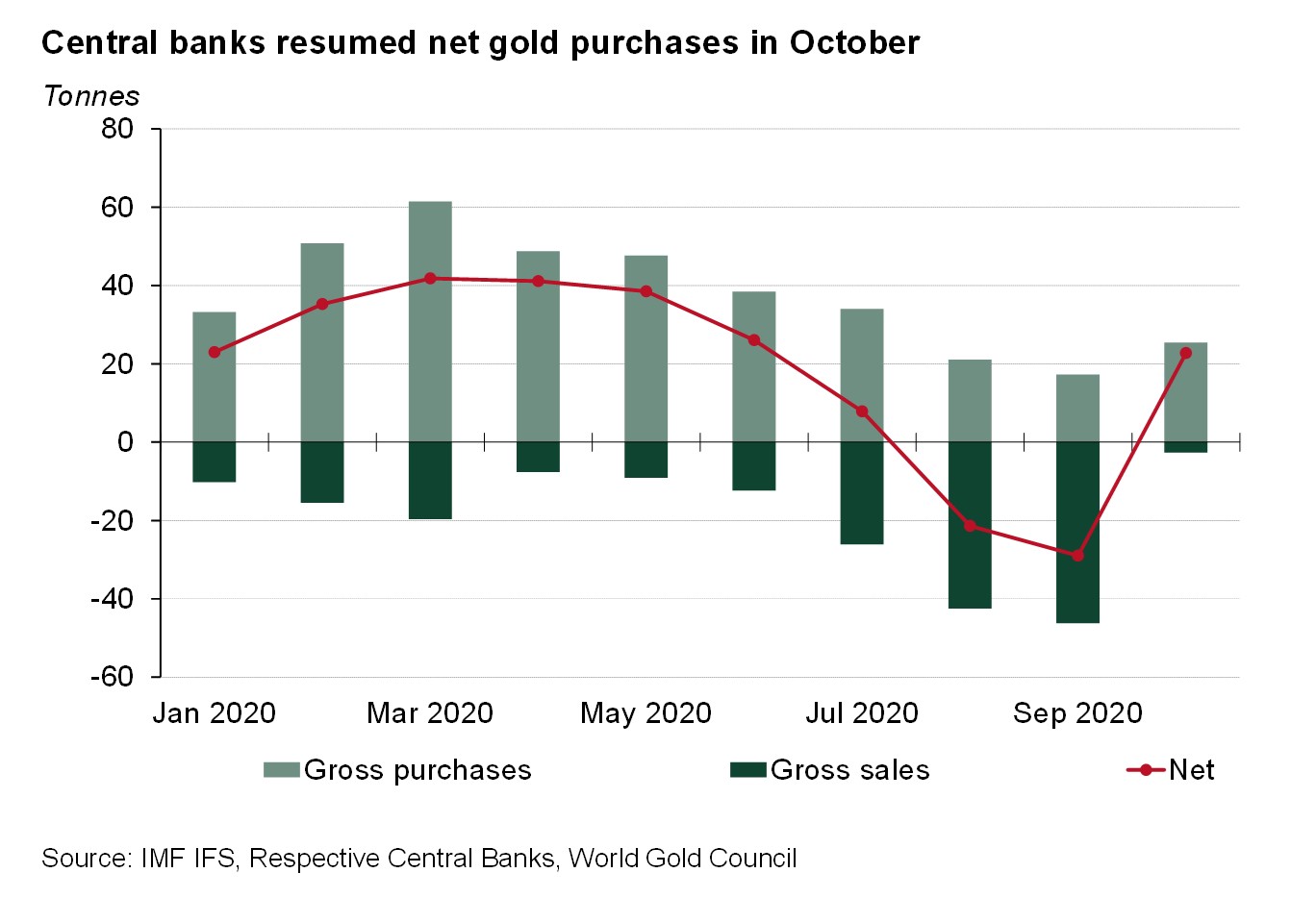
    Following two consecutive months of net sales, central banks resumed buying in October: global official gold reserves rose by 22.8t on a net basis. Levels of buying remained consistent with the previous two months, but selling activity was far reduced. As we noted in our Q3 Gold Demand Trends report, Q3 2020 was the first quarter of net sales since Q4 2010, largely due to hefty sales from Uzbekistan and Turkey. This prompted a renewed focus on central bank gold demand and whether it signalled a change in mindset towards gold accumulation.


    Gold (+18.6% y-t-d1) has continued to outperform many other traditional reserve assets this year, providing central banks with the added firepower needed to stabilise markets and currencies amid unprecedented levels of uncertainty. While it is unsurprising to see some selling, given gold’s role as a safe, liquid reserve asset, the continued accumulation by central banks underscores its importance to central bank portfolios.

    Familiar banks continue to drive demand.2 At a country-level, activity in October was concentrated among a familiar roster of emerging market central banks, a trend which has been in place for some time. Gross purchases totalled 25t in October, with five central banks almost entirely responsible for this growth: Uzbekistan (8t), Turkey (7t), UAE (6t), Qatar (2t), and India (2t). In contrast, gross sales were just under 3t during the month, with Mongolia for accounting for the majority of this.

    Y-t-d, central bank net purchases continue to sit between 200-300t. Buyers have outnumbered sellers so far in 2020 (9 vs 8), with buying coming from several countries that mostly have relatively low ratios of gold-to-total reserves, demonstrating a continued appetite to grow gold holdings at a strategic level.

    The full central bank gold reserves dataset can be downloaded here.


    Footnotes

    1 Calculated using the LBMA Gold Price PM as at 1 December 2020

    2 Country-level commentary includes net purchases/sales of a tonne or more only.


    Latest research

    Looking for insight and analysis on gold? Our team of experts produce market-leading research and macroeconomic commentary on gold.