The result: a $160 billion market by 2031
19 October, 2026
In our base case, the retail digital gold market is projected to grow from approximately $45-$55 billion today to $160–170 billion by 2031, representing annual expansion of around 27%. At that size, the digital gold market would be more than a quarter of the size of today’s gold-backed ETF market.
In the bull case, the market will reach $270–$280 billion by 2031 as barriers are removed more rapidly, accelerating the conversion of interest into investment.
In the bear case, no current market barriers are addressed at meaningful scale and the market will expand to $70–$80 billion by 2031, driven primarily by underlying drivers of growth in the digitally-enabled population and in investable wealth, as opposed to conversion of latent demand.
The gap between the bear case and the others is, in effect, the value of latent demand that is actually converted. Structural tailwinds will grow the market regardless, but everything above the bear case depends on the speed and scale at which the barriers are addressed.
How we built the scenarios
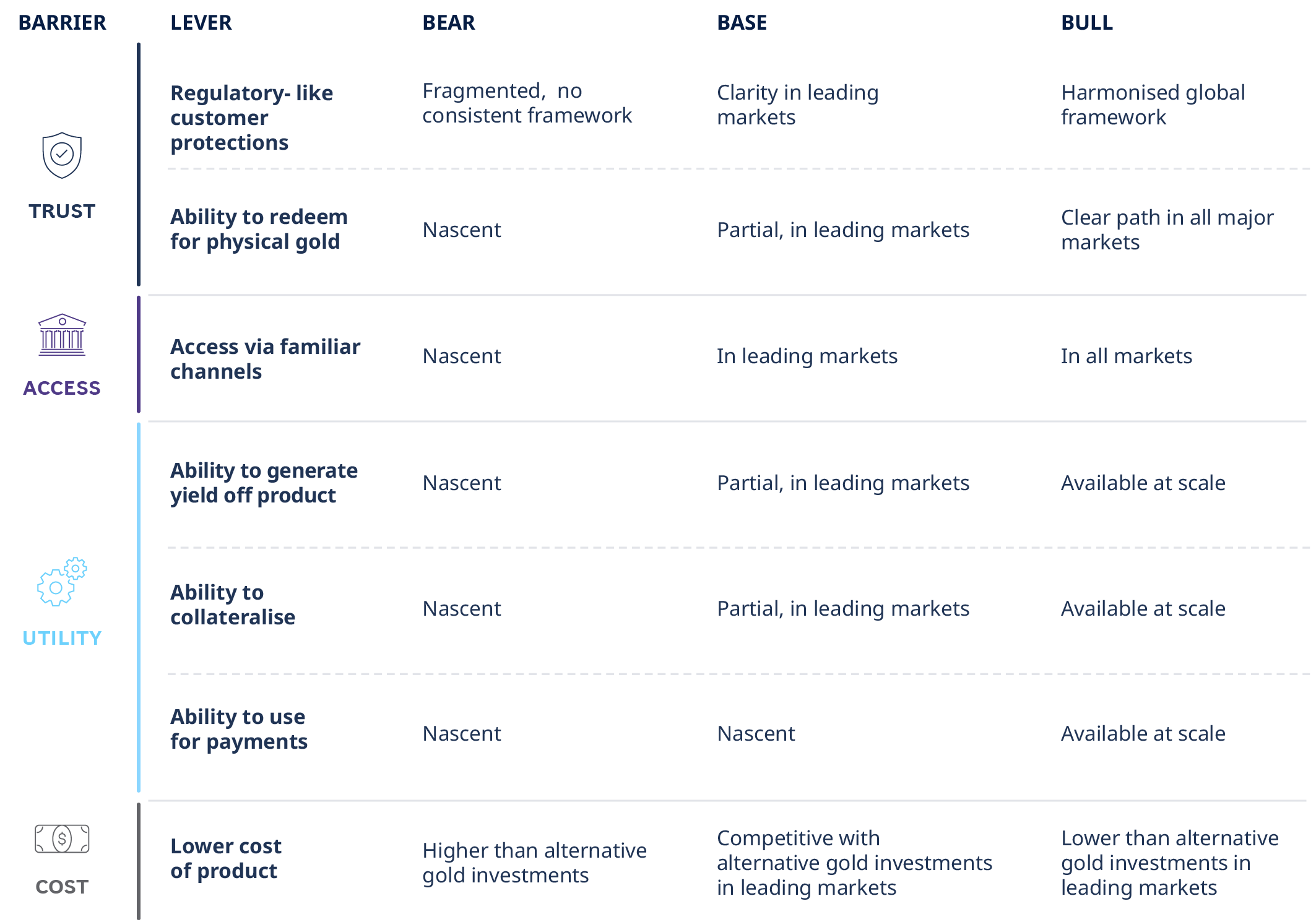
All three scenarios share the same structural tailwinds: population growth, a rising share of digitally enabled investors, and growth in investable wealth. Where they differ is in how far and how fast the four barriers will fall (Exhibit 8):
Base case. Stronger consumer protections, greater regulatory clarity and clear redemption pathways in leading markets foster trust, while wider bank and mainstream distribution expand access. Costs are competitive with alternative gold investments and new yield, collateral and payment use cases see limited adoption.
Bull case. Robust consumer protections, a harmonised global regulatory framework and transparent backing with clear physical redemption build trust across markets. Banks and scaled platforms provide broad access, costs fall below alternative gold investments and new use cases reach meaningful scale.
Bear case. Trust remains a challenge due to limited consumer protections, fragmented regulation and uncertainty over physical backing without a clear redemption path. Access through banks and mainstream channels is limited, costs remain higher than alternative gold investments and new use cases fail to reach meaningful scale.
EXHIBIT 8
The scenarios make different assumptions about trust, access, cost and utility
What would it take to achieve our base case?
Achieving the base case means making progress on all four barriers, meaning the digital gold market must focus on:
Building trust.
In many markets, product standards and regulatory regimes remain fragmented or absent, and often it is unclear who the relevant regulator should be. Equally, digital gold investors need greater assurance on physical backing and protection in the event of issuer insolvency or misconduct.
More than 40% of survey respondents say that a major custody failure, fraud or hack would damage their confidence.
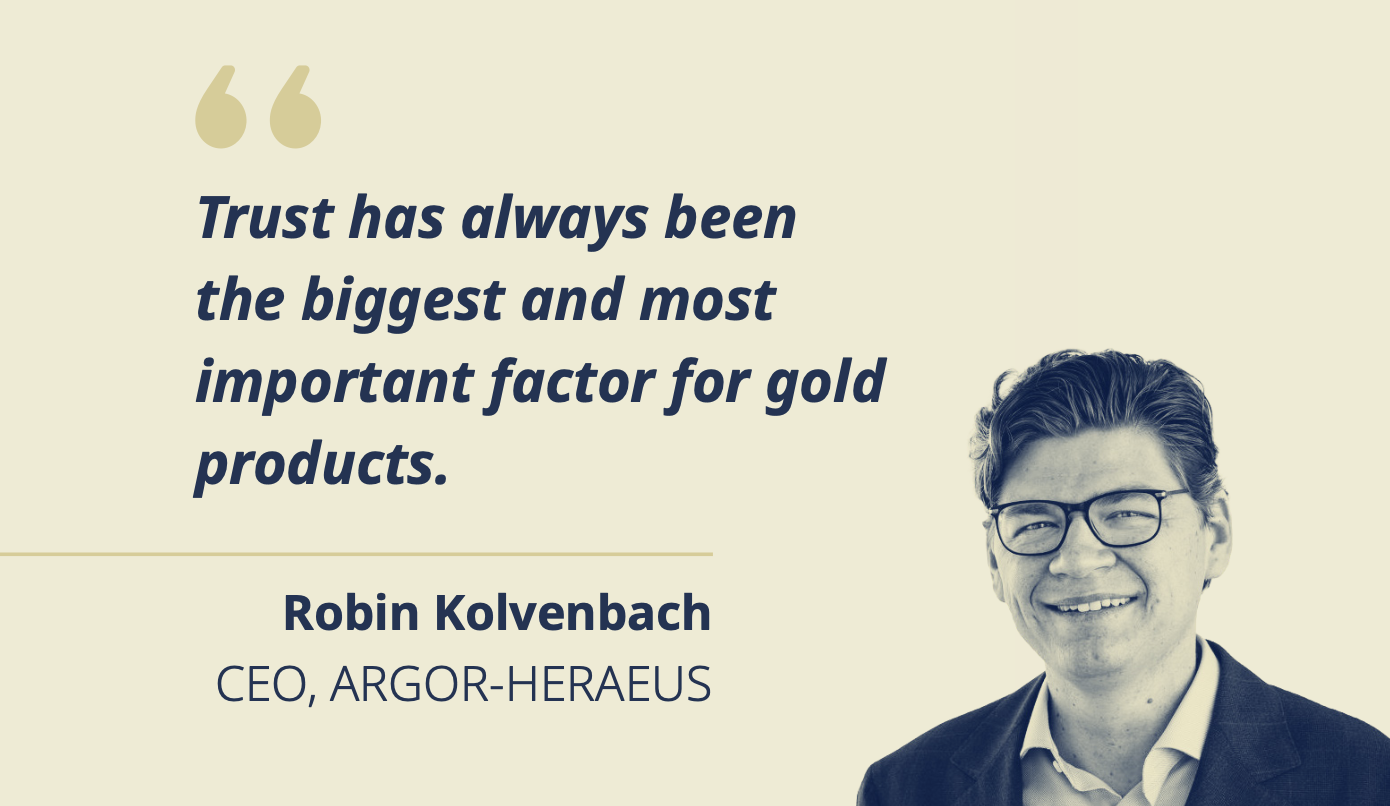
While the products are ready, the ecosystem around them needs to catch up. Boosting trust in digital gold will require clear and consistent standards, effective regulation and greater transparency around product structures, as well as physical backing and investor safeguards. Still, there are signs that regulatory momentum is building. Indonesia has introduced a dedicated digital gold regulatory regime, while the UK Financial Conduct Authority has launched a Call for Input on tokenised gold. Hong Kong has committed to bringing gold-backed tokens into its tokenised investment product framework. These initiatives will not only reassure potential investors but provide the clarity that financial institutions need to bring products to market.
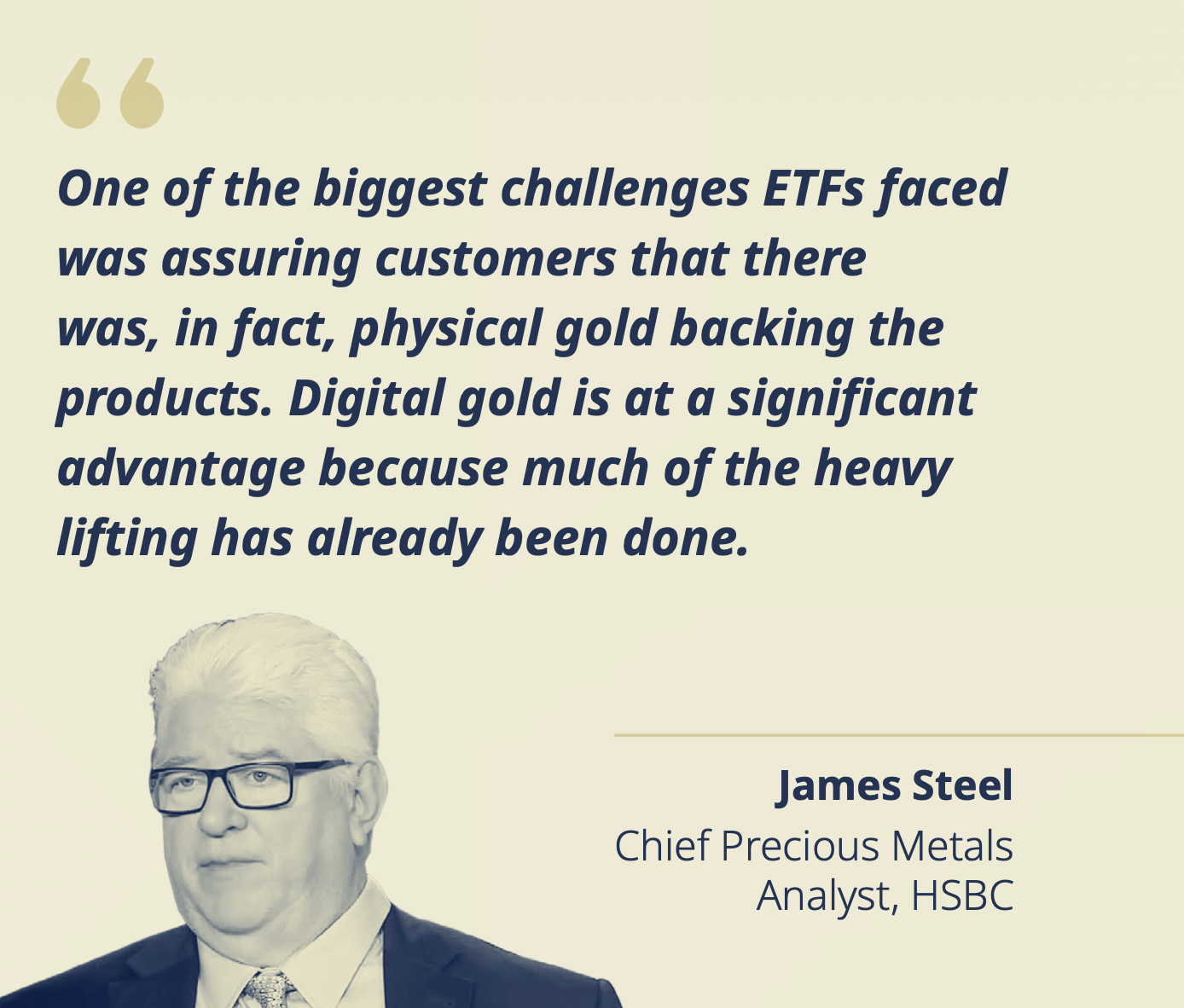
Regulatory clarity addresses one source of doubt; physical backing is the other, and redemption is where that backing is proven.
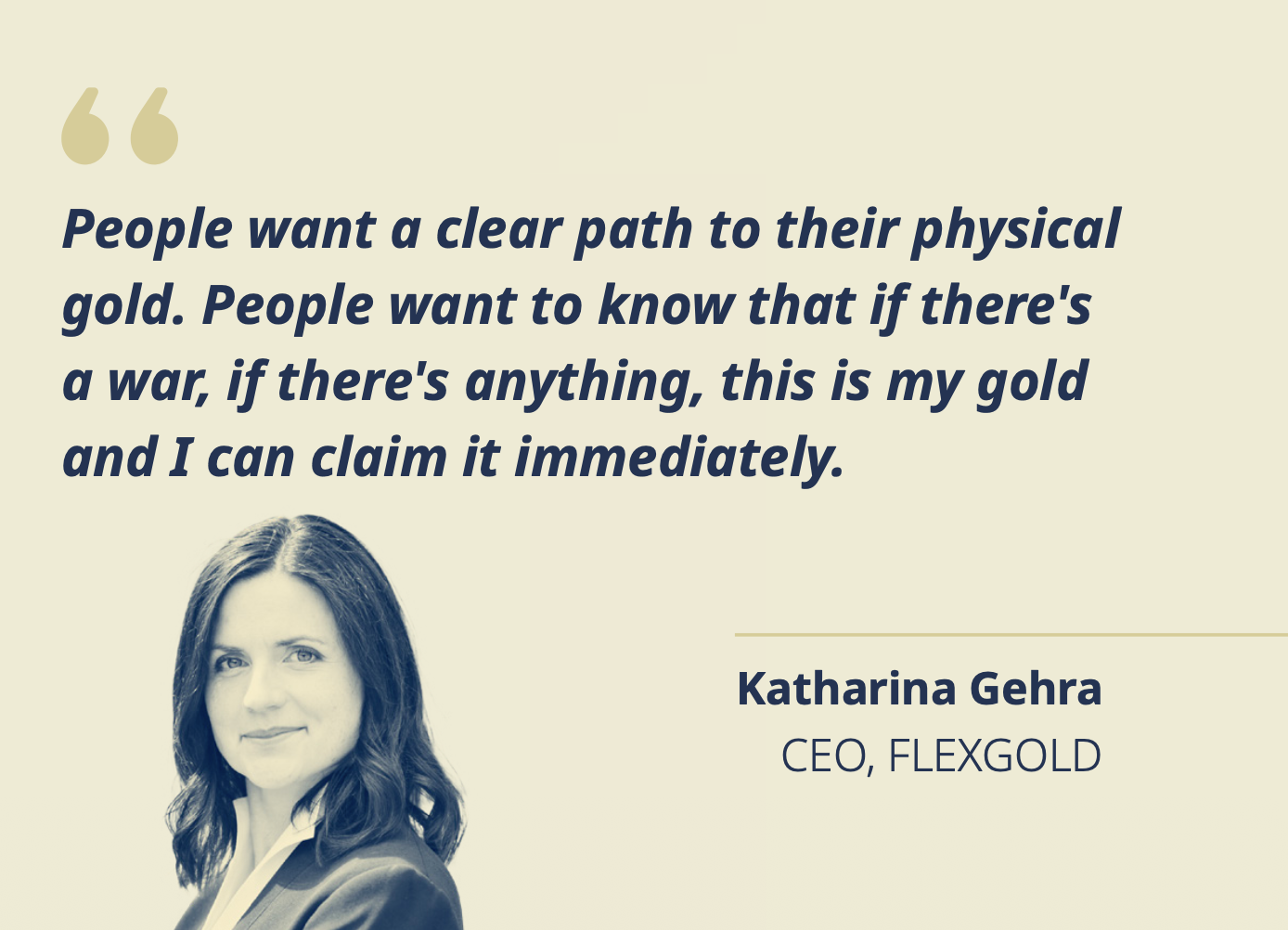
Redemption is possible today, but the terms are often restrictive, both in terms of where the metal can be redeemed (in many cases, one location worldwide) and in the minimum value required (for example, a 400-ounce bar). As a result, redemption currently functions mainly as a guarantee, and issuers that already offer it say it is a primary reason why customers trust the product. Widening that guarantee, through more redemption locations and lower minimum thresholds would fuel demand. Customers will trust digital gold products more if they can sell easily and exchange the product for cash or the physical metal.
Unlocking access.
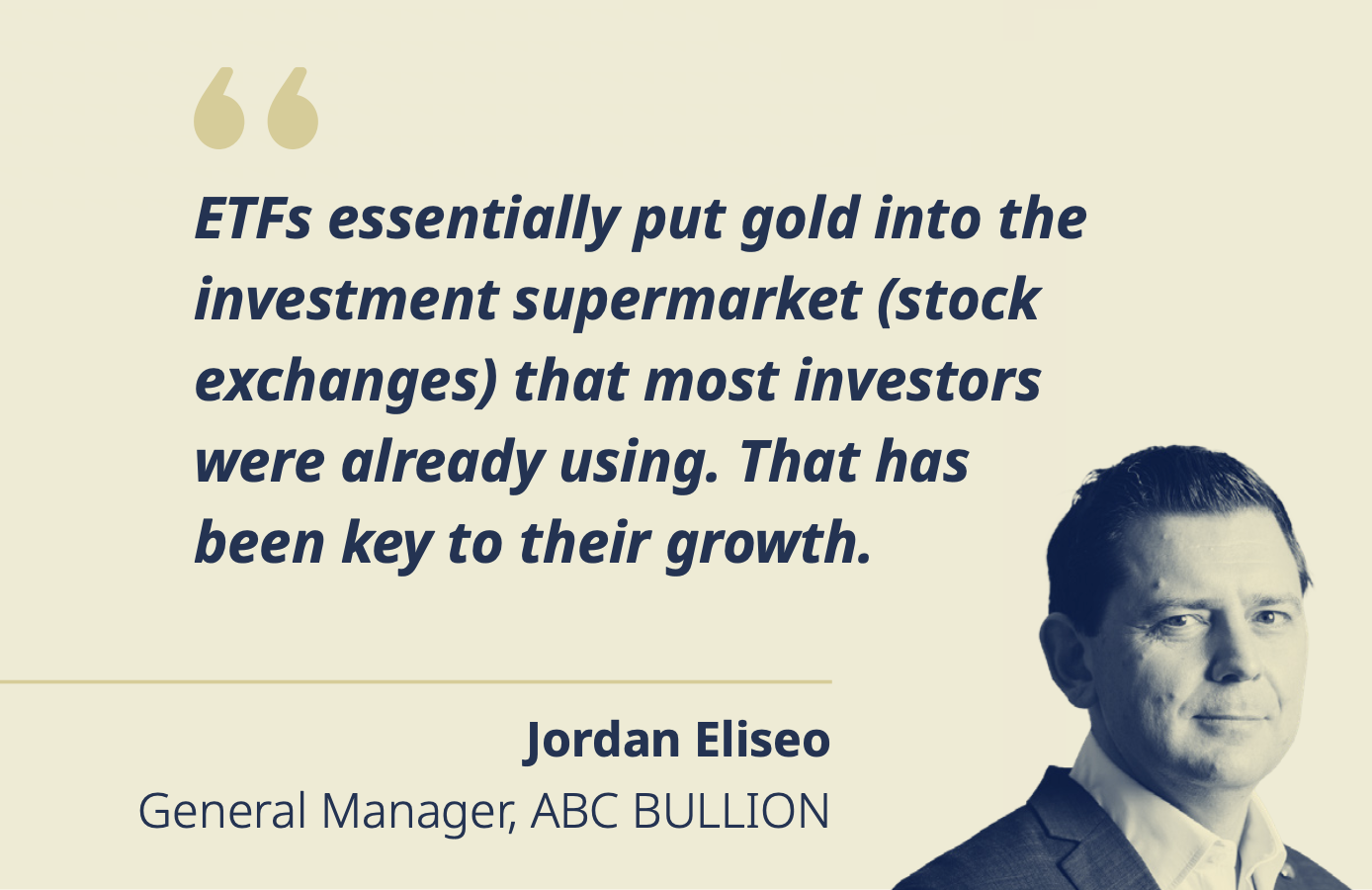
Digital gold must become easier to find and buy. This means offering products through reputable, familiar institutions and integrating them into established channels.
For the most part, digital gold is not yet accessible through everyday financial platforms. Indeed, particularly in the case of tokenised gold, access remains limited, often requiring investors to engage with unfamiliar routes to market, such as setting up a crypto wallet. As a result, adoption has been concentrated among crypto-native and digitally confident investors.
Where digital gold has been embedded into channels that investors already use, the results have been compelling. In India and Indonesia, digital gold products have been integrated into super-apps, payment platforms and banking channels, leading to over 120 million customers in India1 having engaged in digital gold transactions and 5 million in Indonesia.2
Expanding product utility.
Much latent demand for digital gold is due to the product’s potential for incremental utility, with the top use cases being yield generation from activities such as lending, collateral servicing and payments, as well as a clear path to physical redemption.
Earning a yield is typically achieved by lending the product out or posting it as collateral. Payments usually consist of using gold to transact directly or send remittances. These use cases remain nascent in digital gold and represent a significant opportunity.
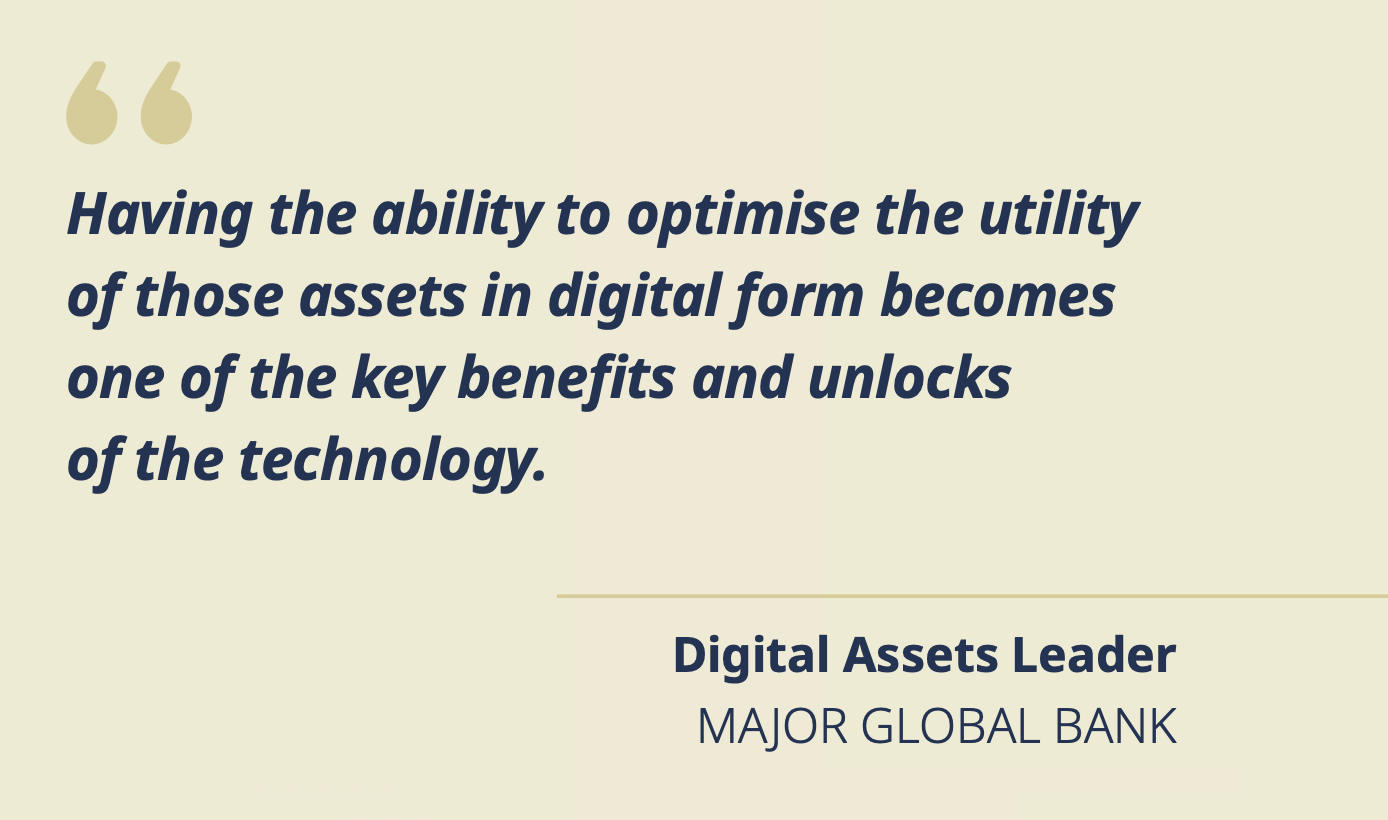
Yield generation through activities such as lending, collateral use and options writing is already possible for physical gold and gold ETFs, although it typically requires a specific brokerage feature or directly negotiated terms. Uptake among retail investors remains low. Embedding ownership in smart contracts could enable holdings to be pledged, transferred, reallocated or used to write derivatives automatically, potentially creating a significant investment opportunity.
The shift is already happening, but not through traditional channels.
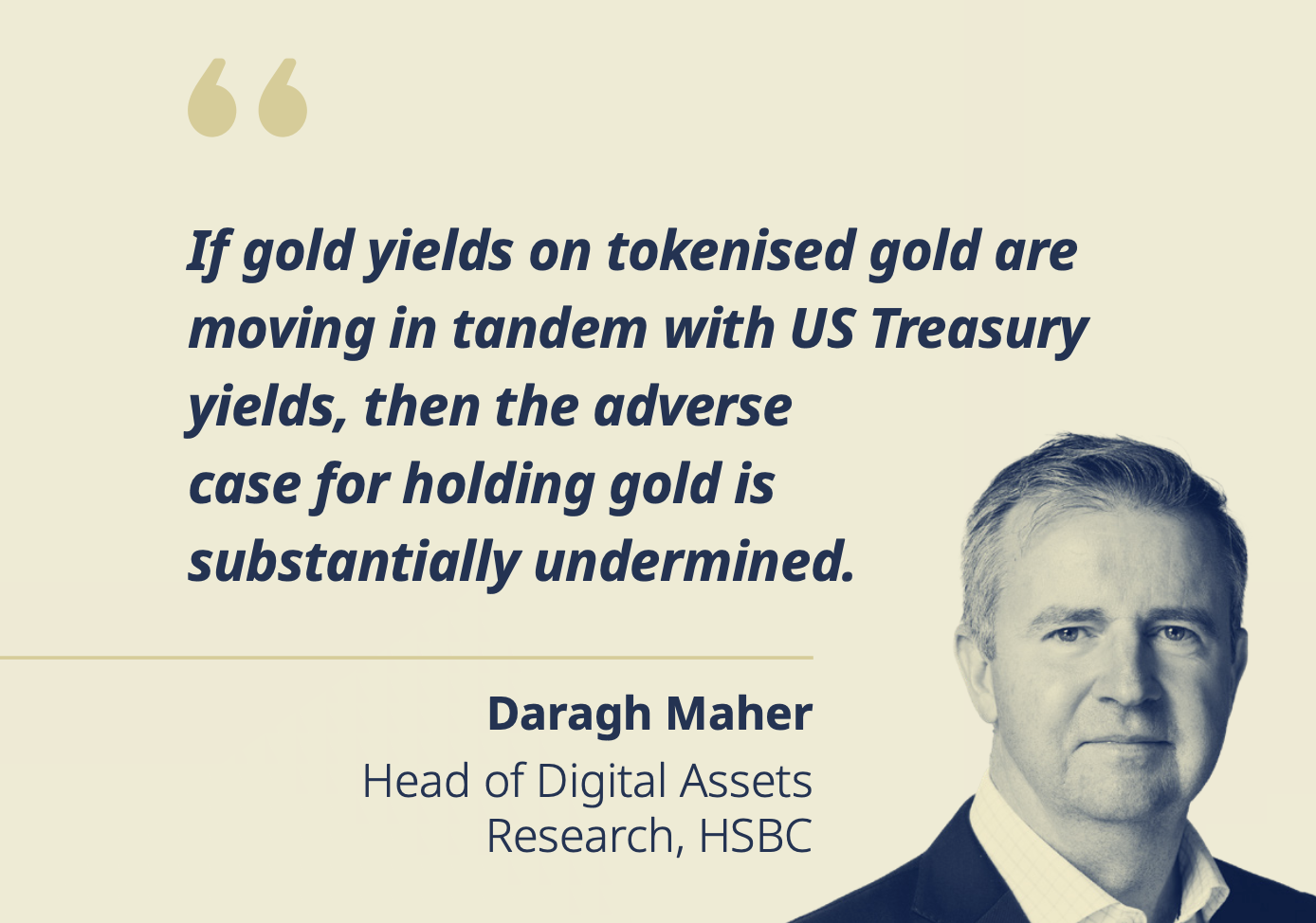
PAXG and XAUT are deployable as collateral on Aave, one of the largest relevant platforms, which alone holds more than half of tokenised gold DeFi deposits. In early 2026, levels of demand to borrow against XAUT repeatedly hit the platform’s supply cap (the maximum amount that can be posted as collateral across the platform).
The trend is now broadening beyond decentralised platforms. In September 2026, Arch Lending, a crypto lending platform, also began accepting PAXG and XAUT as loan collateral.3 Tokenised gold turns over daily at roughly six times the rate of major gold-backed ETFs,4 showing holders are actively trading, rather than just holding. Paxos Labs’ newly launched gold-backed cryptocurrency token (PAXGy) goes a step further, building a yield directly into a PAXG-backed token through gold lending to institutional borrowers.
In the first quarter of 2026, cumulative trading volume in gold-backed tokens exceeded $90 billion, more than in the whole of the preceding year. That is a sure sign of growing product utility and the opportunity for value capture across the value chain.
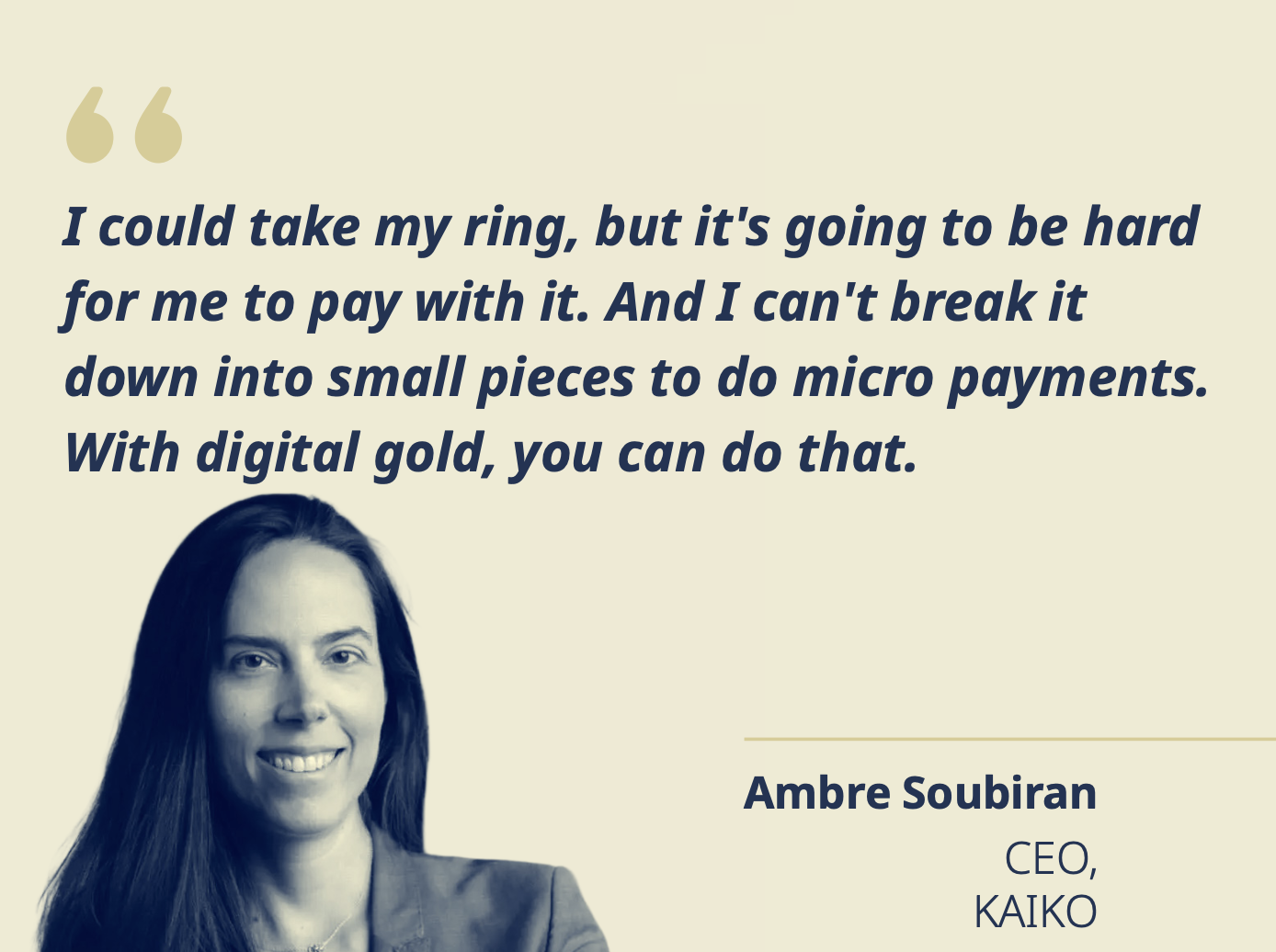
Payments is another use case, but it remains niche, despite the fact that digitisation removes the physical constraint that has historically stood in the way. Market participants must overcome two barriers: building the necessary infrastructure and persuading merchants to accept it. Both have stalled would-be alternatives to fiat for centuries.
That said, the rise of cryptocurrencies and fiat-denominated stablecoins over the past decade has effectively dismantled both payments barriers on gold’s behalf. Blockchain rails built for other digital assets give gold tokens a ready-made transmission network. The ability to swap gold tokens for stablecoins means merchants can accept a gold-funded payment and receive fiat equivalents without ever needing to hold gold themselves.
>$90B - Cumulative trading volume in gold-backed tokens in the first quarter of 2026
Becoming more competitive on costs.
Even where trust and access improve, digital gold products must compete on price with other products, including physical gold and gold-backed ETFs. Digitisation on its own does not lower the underlying cost base, because sourcing, custody and compliance costs remain largely the same.
Some digital gold providers have not viewed user fees as the primary source of revenue (unlike other product categories), testing to capture revenue from other intermediaries. Physical gold carries a different cost profile, a purchase premium of several percentage points over spot for coins and small bars and ongoing vaulting and insurance costs. Whether that pricing will hold in future depends on two key drivers. The first is assets under custody (AUC) volume, which offers economies of scale on the supply side by spreading sourcing, custody and compliance costs across a larger asset base. The second is trading velocity, which determines how much value providers can capture across the value chain as holdings turn over more frequently. Providers need to be able to offer competitive pricing to solve for both.
Footnotes
-
WGC's India digital gold research
-
Gold Trading Volumes, and CoinGecko data on PAXG and XAUT