India gold market update: Volatility softens demand
20 March, 2026
Highlights
- Gold prices ease from peak, but underlying strength holds
- Indian domestic price remains at a discount to international price, indicating adequate supply and subdued local demand
- Price volatility weighs on demand, structural support stays constructive
- Gold ETFs see persistent inflows despite tactical profit taking
- Imports cool but remain above trend.
Looking ahead
- Demand could see a recovery around key festivals in April and the wedding season in smaller towns. Overall buying interest will be influenced by price-trend stability.
Prices ease, underlying strength prevails
Gold prices have pulled back from end-January highs, pressured by a stronger US dollar and a rise in US Treasury yields. In addition, outflows from gold ETFs, particularly US-listed gold ETFs, – likely indicating tactical profit taking from the sharp rally in January – further weighed on prices. However, the pullback was contained, as heightened geopolitical tensions and ongoing policy uncertainty continued to reinforce gold’s role as a safe-haven asset. Moreover, Asian demand has been strong, with trading during Asian hours contributing positively to returns (1.5% v/s -4.7% during US trading hours).1 Also, barring the US, ETF demand has been positive across other regions, and the COMEX net long positioning has continued to build.
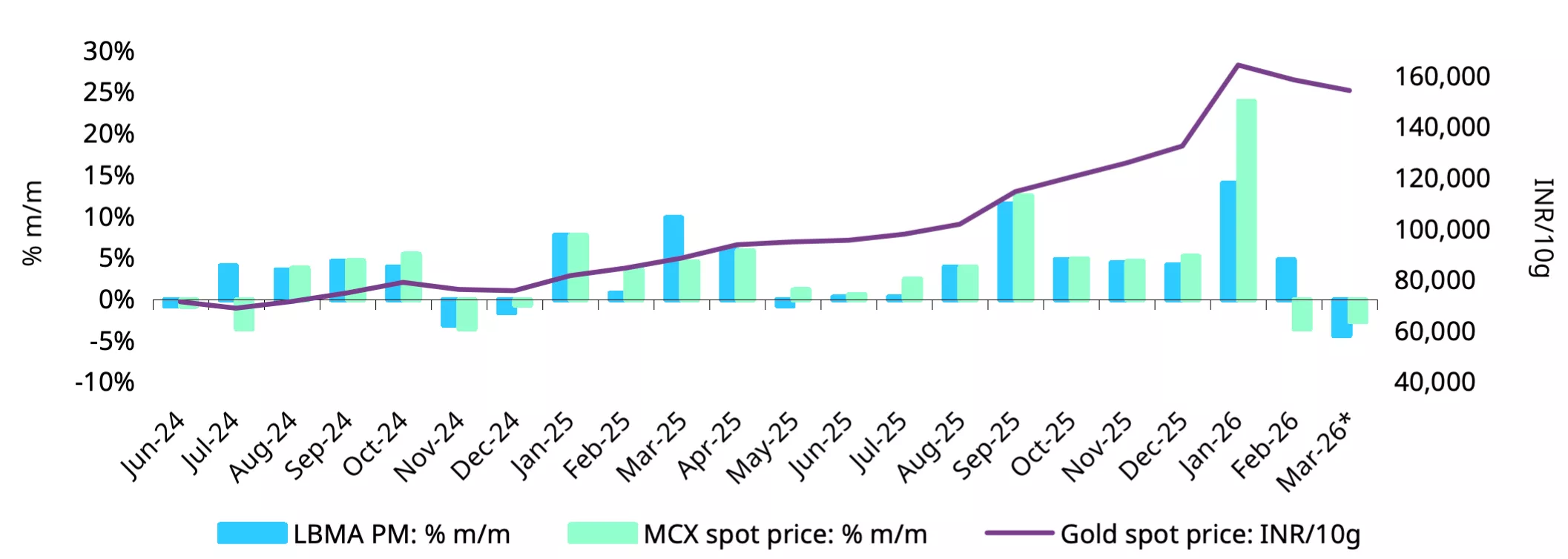
Chart 1: Prices ease, levels stay elevated
End-of-month LBMA Gold Price PM and MCX domestic spot price m/m changes and price level*
*Based on the LBMA Gold Price PM in US$ and MCX spot gold price as of 16 March 2026.
Source: Bloomberg, World Gold Council
Domestic gold prices diverged from international trends during February, declining 3.5%, even as international prices gained 5%.2This divergence was primarily driven by an appreciation in the Indian rupee against the US dollar and fewer revisions in the customs tariff value.3 So far in March domestic prices have realigned with international price trends: both moderating from end-February levels. However, as of 16 March the decline in domestic prices (2.6%) has been less pronounced than the 4.4% decline in international prices, as the recent INR depreciation4 has cushioned the downside in local prices. Despite the recent pullback, gold prices remain firm on a y-t-d basis, with international prices up 14% and domestic prices rising 16% to INR 154,395/10g,5 underscoring that the broader uptrend remains in place.
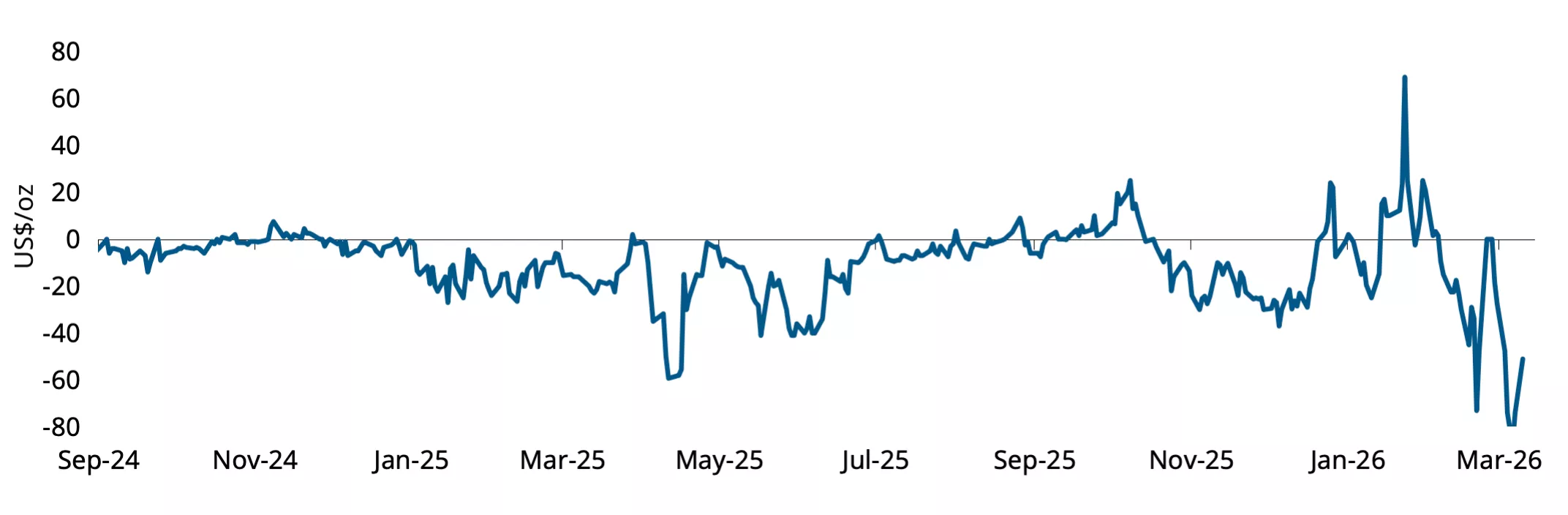
Chart 2: Discounts persist
NCDEX gold premium/discount relative to the international price*
*As of 16 March 2026.
Source: NCDEX, World Gold Council.
The domestic market has traded at a discount to international benchmarks since the second week of February. The discount briefly narrowed to par/slight-premium levels in early March on fears of supply tightness following geopolitical tensions involving Iran–US–Israel; disrupted flight routes from the UAE have interrupted India’s key supply channel, through which 24% of India’s gold was imported in 2025.
The move, however, was short-lived, with domestic prices reverting to a discount. Muted jewellery demand, along with likely earlier inventory build-up, ensured adequate supply. Discounts averaged US$58/oz during the first half of March, suggesting that near-term supply remains adequate relative to demand.
Volatility dents demand, structural support intact
Insights gathered from local market participants suggest that consumer demand for gold remained subdued despite the recent pullback from record highs. Buying interest was stronger during the earlier price uptrend – particularly on the investment side (bars and coins) – but has since softened amid heightened price volatility, leading consumers to defer purchases.
Seasonal and financial factors further weighed on demand. March is typically a softer month, marked by financial year-end closures and related statutory payments and tax outflows, which constrain liquidity for both consumers and retailers. Some retailers have reportedly liquidated inventory to meet tax obligations.
But the underlying trends remain constructive. Affluent consumers, who are relatively less sensitive to price levels, continue to support jewellery demand. Retailers are also reporting emerging interest from younger buyers, particularly for lightweight, contemporary, and predominantly plain gold jewellery (of 22k and 18k purity), which is increasingly viewed as an investment. Importantly, there is only limited evidence of profit-booking-driven liquidation, suggesting that sentiment towards gold remains positive, even as consumers gradually adjust to a higher price base. Retailer purchases, meanwhile, have been largely linked to store expansion and inventory requirements, rather than demand-led restocking.
Gold ETFs: inflow momentum continues alongside profit taking
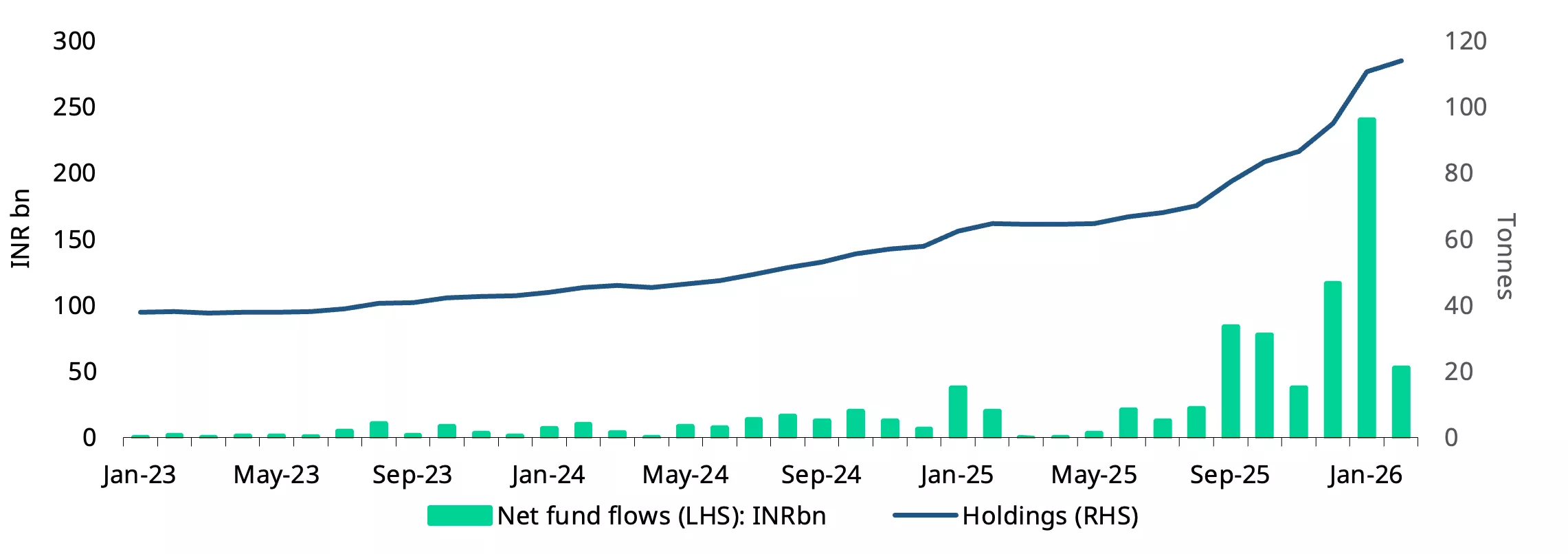
Gold ETF inflows remained positive in February for the tenth consecutive month, albeit at a slower pace compared to the exceptionally strong inflows in the preceding two months. In line with our initial estimates, net inflows stood at INR52.5bn (US$579mn), translating into an addition of 3.3t to ETF gold holdings. The 78% m/m decline in net inflows in February was largely driven by tactical profit taking amid softer gold prices, with redemption during the month reaching a record INR250bn (US$276mn) as per AMFI data.
Despite the moderation on a sequential basis, February inflows remained well above the May-November 2025 average of INR 36.7bn (US$417mn), indicating that investor interest in gold ETFs remains relatively sticky. The trend has continued into March, with estimated net inflows of INR42bn (US$456mn) during the period 1-12 March; this additional 2.6t takes total holdings to 116.5t.
Investor participation continued to broaden during February, with around 0.65mn new folios (accounts) added, taking the total number of accounts directly invested in gold ETFs to 12.1mn. This highlights the growing adoption of gold ETFs within investor portfolios.
Regulatory developments could further support the segment’s growth. In February, Securities and Exchange Board of India (SEBI) introduced new rules6 allowing actively managed equity mutual funds to invest part of their residual portfolio allocation (up to 35% of assets beyond core equity exposure) in gold and silver ETFs, giving fund managers greater flexibility in portfolio diversification. The move could potentially lead to incremental institutional flows into gold ETFs. Reflecting the segment’s expanding role within the mutual fund industry, gold ETFs accounted for around 2.3% of overall mutual fund assets in February, broadly stable m/m but significantly higher than 0.9% one year ago.
A new gold ETF is being launched in March, taking the total number of gold ETFs in India to 26.7 A full list of the gold ETFs we track worldwide is available on Goldhub.com.
Chart 3: Inflows moderate, momentum holds
Gold ETF flows in INRbn, and total holdings in tonnes*
*As of end February 2026.
Source: AMFI, ICRA Analytics, CMIE, World Gold Council
Sequential drop in imports
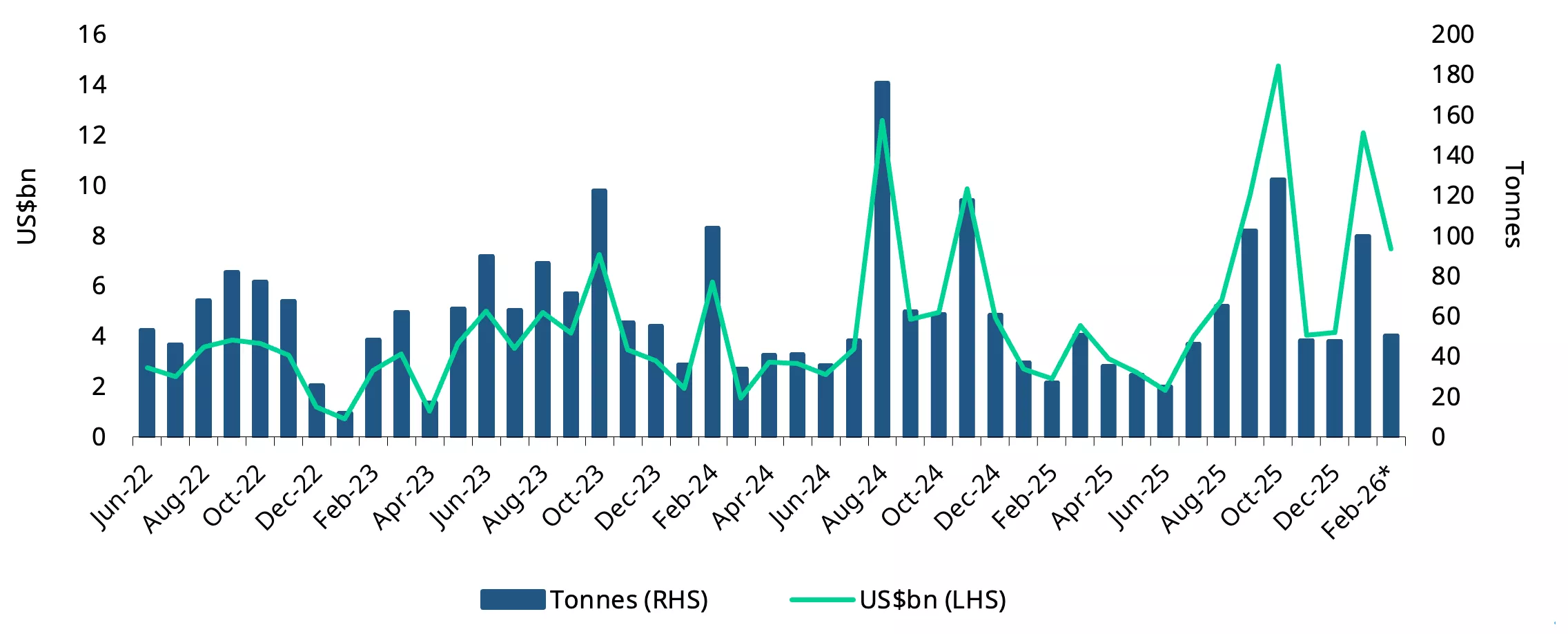
Gold imports moderated in February from the previous month, reflecting near-term demand softness amid elevated prices and volatility. However, imports remained significantly higher on an annual basis, rising 224% in value terms and over 80% in volume terms. At US$7.5bn, imports were 38% lower m/m but ~31% higher than the trailing 12-month average, indicating that underlying demand prevails despite likely price-led moderation in buying activity. In volume terms, February imports are estimated to be in the range of 48t–56t, notably lower than the 99t recorded in January but above the 31t of February 2025 and broadly in line with the 12-month average of 59t.
Late-February geopolitical developments in the Middle East are not yet reflected in the import data. Media reports8 indicate that flight disruptions have impacted gold shipments from key regional hubs, particularly the UAE. Any sustained disruption from the region could tighten near-term domestic supply conditions and prompt rerouting of imports.
Chart 4: Imports strong despite m/m dip
Monthly gold imports in tonnes and US$bn
*Includes World Gold Council estimates on import volumes.
Source: Ministry of Commerce and Industry, CMIE, World Gold Council
Footnotes
1Based on Asia, Europe and US trading window from 2 March to 18 March 2026 as estimated by World Gold Council.
2Based on MCX spot gold price in INR and LBMA Gold Price PM in USD.
3Customs duty on gold imports is levied on a notified value fixed by the Central Board of Indirect Taxes and Customs, rather than solely on invoice prices. There is no fixed schedule for revising the notified value. It is typically updated every few weeks and more frequently during periods when international price volatility is high.
4INR has depreciated against the USD by 1.6% during 1-16 March 2026.
5MCX spot gold price as of 16 March 2026.
6Categorization and Rationalization of Mutual Fund Schemes, SEBI, 26 February 2026.
8India staring at likely gold, diamond shortage after US and Israel strikes on Iran, Economic Times, 2 March 2026.
Disclaimer
Important information and disclaimers
© 2026 World Gold Council. All rights reserved. World Gold Council and the Circle device are trademarks of the World Gold Council or its affiliates.
All references to LBMA Gold Price are used with the permission of ICE Benchmark Administration Limited and have been provided for informational purposes only. ICE Benchmark Administration Limited accepts no liability or responsibility for the accuracy of the prices or the underlying product to which the prices may be referenced. Other content is the intellectual property of the respective third party and all rights are reserved to them.
Reproduction or redistribution of any of this information is expressly prohibited without the prior written consent of World Gold Council or the appropriate copyright owners, except as specifically provided below. Information and statistics are copyright © and/or other intellectual property of the World Gold Council or its affiliates or third-party providers identified herein. All rights of the respective owners are reserved.
The use of the statistics in this information is permitted for the purposes of review and commentary (including media commentary) in line with fair industry practice, subject to the following two pre-conditions: (i) only limited extracts of data or analysis be used; and (ii) any and all use of these statistics is accompanied by a citation to World Gold Council and, where appropriate, to Metals Focus or other identified copyright owners as their source. World Gold Council is affiliated with Metals Focus.
The World Gold Council and its affiliates do not guarantee the accuracy or completeness of any information nor accept responsibility for any losses or damages arising directly or indirectly from the use of this information.
This information is for educational purposes only and by receiving this information, you agree with its intended purpose. Nothing contained herein is intended to constitute a recommendation, investment advice, or offer for the purchase or sale of gold, any gold-related products or services or any other products, services, securities or financial instruments (collectively, “Services”). This information does not take into account any investment objectives, financial situation or particular needs of any particular person.
Diversification does not guarantee any investment returns and does not eliminate the risk of loss. Past performance is not necessarily indicative of future results. The resulting performance of any investment outcomes that can be generated through allocation to gold are hypothetical in nature, may not reflect actual investment results and are not guarantees of future results. The World Gold Council and its affiliates do not guarantee or warranty any calculations and models used in any hypothetical portfolios or any outcomes resulting from any such use. Investors should discuss their individual circumstances with their appropriate investment professionals before making any decision regarding any Services or investments.
This information may contain forward-looking statements, such as statements which use the words “believes”, “expects”, “may”, or “suggests”, or similar terminology, which are based on current expectations and are subject to change. Forward-looking statements involve a number of risks and uncertainties. There can be no assurance that any forward-looking statements will be achieved. World Gold Council and its affiliates assume no responsibility for updating any forward-looking statements.
Information regarding QaurumSM and the Gold Valuation Framework
Note that the resulting performance of various investment outcomes that can be generated through use of Qaurum, the Gold Valuation Framework and other information are hypothetical in nature, may not reflect actual investment results and are not guarantees of future results. Neither World Gold Council (including its affiliates) nor Oxford Economics provides any warranty or guarantee regarding the functionality of the tool, including without limitation any projections, estimates or calculations.